When Darkness Brings a Different Danger: Understanding Nighttime Blood Pressure Drops in Lisinopril Patients

Most conversations about lisinopril therapy focus on what happens when blood pressure stays too high. Physicians adjust doses upward, patients monitor their morning readings, and the goal is always to bring numbers down. But there is another side to this equation — one that receives far less attention in routine clinical visits — and it involves blood pressure that drops too low, not during the day, but while you are asleep.
This phenomenon, known as nocturnal hypotension, is not rare among patients on antihypertensive medications. For those taking lisinopril specifically, the timing and pharmacological profile of the drug can interact with the body's natural overnight blood pressure patterns in ways that occasionally tip the balance too far in the wrong direction. Understanding this dynamic is not cause for alarm, but it is cause for attention.
The Body's Natural Overnight Rhythm
Blood pressure is not a static number. It fluctuates throughout the day in response to activity, stress, posture, meals, and dozens of other variables. One of the most consistent and predictable of these fluctuations is the nocturnal dip — a natural decline in blood pressure that occurs during sleep in most healthy individuals.
This overnight reduction, typically ranging from 10 to 20 percent below daytime averages, is a normal feature of cardiovascular function governed by the body's circadian rhythm. During sleep, heart rate slows, the nervous system shifts toward a more parasympathetic state, and the cardiovascular system effectively takes a lighter load. The result is a modest, physiologically appropriate drop in blood pressure.
For the majority of lisinopril users, this dip occurs without incident. The medication's effects blend smoothly with the body's overnight adjustment, and morning readings reflect a stable baseline. However, in a subset of patients, the overnight dip becomes what clinicians describe as an "extreme dipper" or even a "riser" pattern — blood pressure either plummeting beyond what is considered safe or, paradoxically, spiking overnight in ways that suggest the medication's effects are not distributed evenly across the 24-hour cycle.
Why Lisinopril's Timing Matters More Than You Think
Lisinopril is typically prescribed as a once-daily medication. For many patients, that means a morning dose — taken with breakfast, perhaps alongside other medications. This timing is intuitive and convenient, but it has implications for how drug concentrations behave overnight.
After an oral dose, lisinopril reaches peak plasma concentration within approximately six to eight hours. By the time a patient who took their pill at 7 a.m. goes to bed at 10 p.m., the medication has been active in the body for 15 hours. Drug levels are declining, and the protective effect on blood pressure may be less robust in the early morning hours — a window that happens to coincide with the cardiovascular risk period known as the "morning surge."
Conversely, some patients are instructed to take lisinopril in the evening, a practice supported by a growing body of research on chronotherapy — the science of timing medications according to biological rhythms. For these individuals, peak drug activity occurs overnight. In most cases, this is beneficial. But for patients who are already prone to significant nocturnal dipping, adding peak drug activity during the same window can push nighttime blood pressure into territory that is genuinely too low.
Symptoms of excessive nocturnal hypotension are not always obvious, precisely because they occur during sleep. Some patients wake with dizziness, headaches, or an unusual sense of fatigue that does not resolve with rest. Others experience episodes of lightheadedness when rising from bed in the morning — a sign that blood pressure is struggling to recover quickly enough as the body transitions to an upright position.
Who Is Most at Risk?
Certain patient profiles carry a higher likelihood of experiencing problematic overnight blood pressure reductions on lisinopril. Older adults, particularly those over 65, are more susceptible due to age-related changes in blood vessel elasticity and baroreceptor sensitivity — the mechanisms that help the body self-regulate blood pressure in response to positional and physiological changes.
Patients with diabetes or chronic kidney disease may also show exaggerated nocturnal dipping patterns, as autonomic nervous system dysfunction associated with these conditions can disrupt the normal regulatory responses that buffer overnight pressure changes. Individuals who are dehydrated, follow low-sodium diets, or are simultaneously taking diuretics — a common combination in hypertension management — face compounded risk.
It is also worth noting that patients who have recently had their lisinopril dose increased are in a particularly vulnerable window. The body may not have fully adjusted to the new level of pharmacological activity, making it more likely that nighttime pressure will fall further than intended.
Detection: Why Standard Office Readings Miss the Problem
Here lies the central diagnostic challenge: a standard blood pressure reading taken in a physician's office during daytime hours will not capture nocturnal hypotension. A patient can present with a perfectly controlled reading of 122/78 mmHg at their 2 p.m. appointment and still experience overnight drops into ranges that stress the heart, kidneys, and brain.
The most reliable tool for identifying this pattern is ambulatory blood pressure monitoring (ABPM) — a device worn for 24 hours that records readings at regular intervals throughout the day and night. ABPM provides a comprehensive picture of blood pressure behavior across the full circadian cycle, including the critical overnight window. If you experience symptoms consistent with nighttime hypotension, asking your healthcare provider about ABPM is a reasonable and clinically supported step.
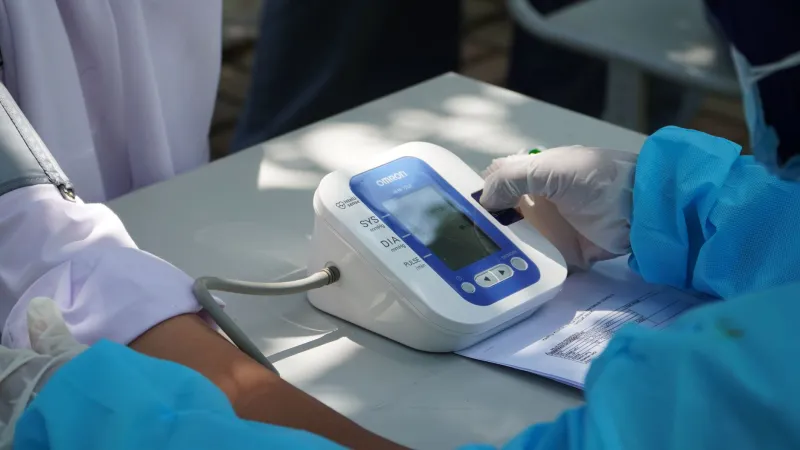
Home blood pressure monitoring can also offer useful supplementary data. Taking a reading immediately upon waking — before standing up, before coffee, before activity — can give you and your provider a rough sense of where your overnight baseline lands.
What Can Be Done
The good news is that nocturnal hypotension in lisinopril patients is almost always addressable once it has been identified. The response depends on the severity of the problem and the individual patient's broader clinical picture.
For some patients, a simple adjustment to dosing timing resolves the issue. Shifting from an evening dose back to a morning dose — or splitting the daily dose if the prescriber deems it appropriate — can redistribute the medication's peak activity away from the overnight window. This is not a decision to make independently; any change to how and when you take lisinopril should be made in direct consultation with your prescribing physician or pharmacist.
Lifestyle factors also play a meaningful supporting role. Ensuring adequate hydration throughout the day, moderating alcohol consumption (which can amplify nighttime blood pressure drops), and maintaining a consistent sleep schedule all contribute to more stable overnight cardiovascular behavior. Patients who sleep in very warm environments or who experience significant fluid losses through perspiration may also benefit from modest increases in fluid intake before bed, again under medical guidance.
In some cases, the appropriate response is a dose reduction — particularly in older patients or those whose overall blood pressure control has improved significantly through lifestyle changes. What was once an appropriate dose may simply be more than the body currently requires.
A Conversation Worth Having
Nocturnal hypotension is one of those clinical realities that does not surface unless someone asks the right questions. If you are on lisinopril and notice unusual morning fatigue, positional dizziness upon waking, or simply feel that something is "off" despite normal daytime readings, bring it up at your next appointment. The relationship between your medication and your overnight physiology is more nuanced than a single number on a cuff, and your care team is best positioned to help you navigate it.
At LisinoprilStore, we believe that well-informed patients are better-equipped patients. Managing hypertension effectively means understanding not just what your medication does, but when it does it — and how that timing intersects with the rhythms of your own body.